Fix Portable Air Conditioner Fan Not Working
If your portable air conditioner fan isn’t working, you’re dealing with one of the most frustrating summer problems. When temperatures climb above 100°F, a broken AC isn’t just uncomfortable, it can become dangerous for vulnerable individuals, including those undergoing medical treatments. The portable air conditioner fan not working issue ranks among the top complaints from users during peak summer months.
This guide walks you through every diagnostic step, from simple fixes you can complete in minutes to signs that mean it’s time to call a professional or replace the unit entirely. You’ll learn exactly what to check, what to clean, and when your portable AC has reached the end of its useful life.
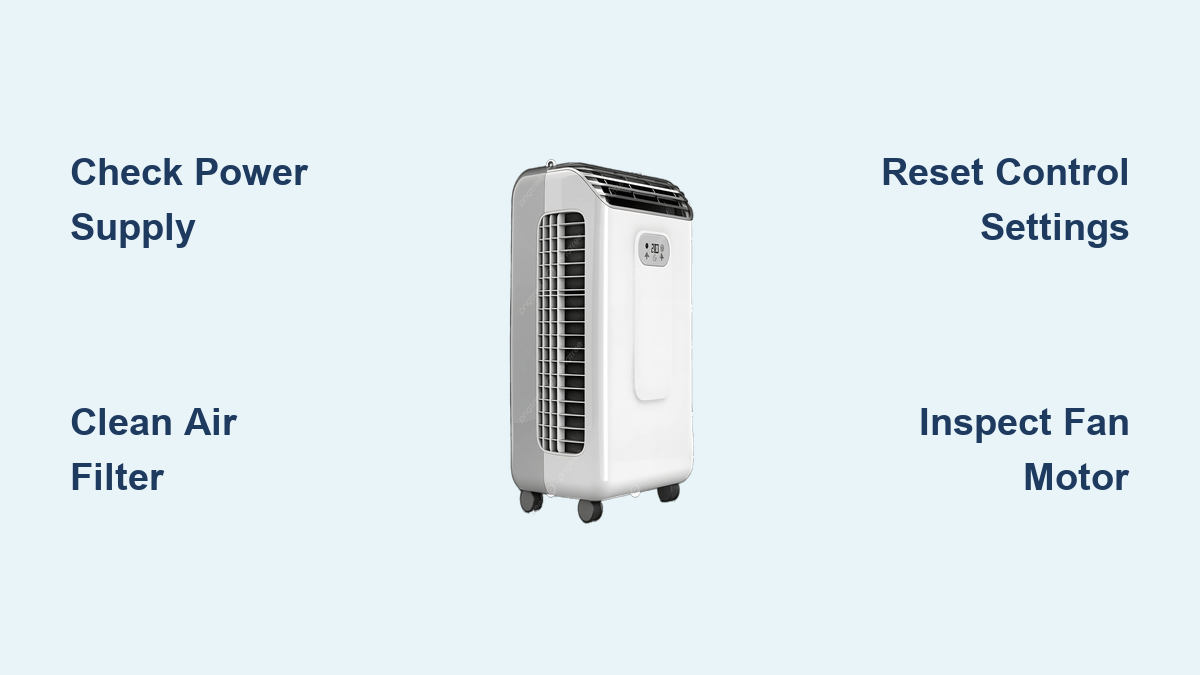
Verify Power Supply to Your Portable AC

Before touching any internal components, confirm your unit is actually receiving power. Many apparent fan failures start with a simple electrical issue.
Test the Outlet Properly
Plug a working device like a lamp or phone charger into the same outlet your portable AC uses. If the test device fails to power on, the problem lies with your home’s electrical system, not the air conditioner. Head to your circuit breaker panel and check for tripped switches or blown fuses. Reset any tripped breakers and test the outlet again.
Check the Power Cord and Connection
Inspect the power cord where it connects to the unit. Pull gently to ensure it’s fully seated in the intake port. A loose connection can cause intermittent power that makes the fan appear to work sporadically or not at all.
Use Surge Protection
Power surges can damage the internal electronics that control fan operation. Always run your portable AC through a surge protector to prevent electrical spikes from frying sensitive control board components.
Critical Safety Rule: Unplug your portable AC before performing any inspection or maintenance. Never work on live electrical components.
Check Control Settings and Mode Selection
Incorrect settings are among the most common reasons the fan seems broken when it’s actually responding to logic commands.
Confirm Cool Mode Is Active
Press the Mode button on your remote or control panel until “Cool” appears on the display. If your unit is in Fan mode, Dry mode, or Sleep mode, airflow may be reduced or automatically cycled off. Only Cool mode ensures the compressor and fan operate together based on temperature demand.
Adjust Thermostat Below Room Temperature
The fan won’t run if your set temperature is equal to or higher than the current room temperature. Lower the thermostat setting by at least 4 to 5 degrees to trigger cooling and fan operation. Check the digital display to confirm your setting is actually below room temperature.
Set Fan Speed to On or High
In Auto mode, the fan may shut off entirely once the target temperature is reached. Switch the fan setting to On or High for continuous airflow. Some models stop the fan completely in Sleep mode during low-demand periods.
Reset Remote and Control Panel
Unresponsive controls often mimic fan failure. Replace the AA batteries in your remote. Point the remote directly at the unit within 10 to 15 feet with no obstructions between them. If buttons still don’t respond, perform a hard reset by unplugging the AC for 5 minutes, then plugging it back in. This clears temporary glitches in the control board.
Clean or Replace the Air Filter

A dirty air filter is the number one cause of fan shutdowns and reduced airflow. This is the most common fix for portable air conditioner fan not working problems.
Why Filters Cause Fan Failure
When clogged with dust, the filter restricts airflow. This causes the evaporator coil to ice over or the unit to overheat, triggering a safety shutdown that stops the fan. The system protects itself from damage by disabling operation.
Step-by-Step Filter Cleaning
- Turn off and unplug the unit.
- Open the front panel and remove the filter.
- Rinse under lukewarm water with a few drops of mild detergent.
- Gently scrub with a soft brush if needed.
- Air dry completely for 24 hours before reinstalling.
Never run the unit with a wet filter. Moisture can damage the motor and promote dangerous mold growth inside the unit.
Recommended Cleaning Schedule
Clean the filter every 1 to 2 weeks during active use. In dusty environments or homes with pets, clean weekly. Regular maintenance prevents the majority of fan failure issues.
Inspect for Airflow Obstructions

Even with a clean filter, blocked vents can stop the fan from running efficiently.
Ensure Proper Clearance Around the Unit
Leave at least 20 inches of space on all sides of your portable AC. Furniture, curtains, or walls positioned too close to intake or exhaust vents restrict airflow and trigger thermal shutdowns. This is a common oversight that causes fans to stop working unexpectedly.
Clear Intake and Exhaust Vents
Visually inspect both the front intake grille and the rear or side exhaust grille. Remove dust, pet hair, leaves, or debris using a vacuum cleaner or soft brush. Blocked vents force the system to work harder, eventually causing the fan to shut down.
Straighten the Exhaust Hose
A kinked or compressed exhaust hose prevents hot air from escaping. This forces the system to overheat and automatically shut down the fan as a protective measure. Check that the hose is fully extended with no sharp bends and securely connected to both the unit and the window kit. Replace cracked or warped hoses immediately.
Diagnose Fan Motor and Blade Problems
If power, settings, and airflow all check out, inspect the mechanical components inside the unit.
Manually Spin the Fan Blades
With the unit unplugged, open the access panel if your model allows it. Gently rotate the fan blades by hand. If they spin freely, the motor may still be functional. If they feel stiff, grind when turned, or stop abruptly, the bearings are worn or the motor is seized. A seized motor often produces a grinding or humming noise when you attempt to power it on.
Listen for Specific Sounds
A humming sound when you try to run the unit means power is reaching the motor, but it cannot start. This usually points to a failed start capacitor, which is a small cylindrical component that provides the initial electrical boost to spin the motor.
Warning: Capacitors store high voltage even when unplugged. Do not touch this component unless you are a qualified technician.
Inspect Fan Blades for Damage
Look for cracks, warping, or chips in the blades. Check for loose mounting screws. Watch for imbalance or wobble during operation. Tighten the central screw if the blade is loose. Replace cracked or bent blades to avoid putting additional strain on the motor.
Address Capacitor and Motor Failures
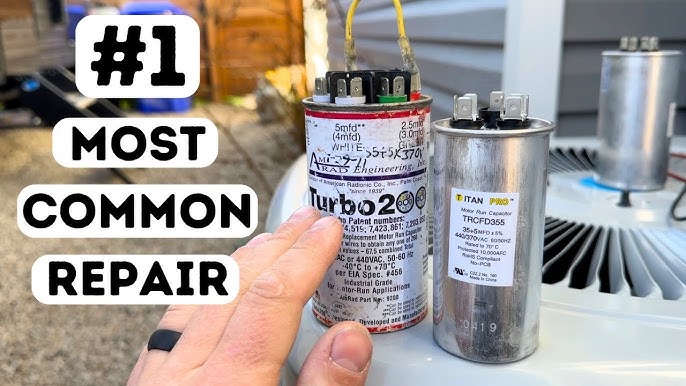
Internal electrical failures require expert diagnosis and repair.
Understanding Capacitor Failure
The start capacitor provides the initial electrical jolt to spin the fan motor. When it fails, the motor hums but doesn’t turn. Symptoms include a fan that won’t start combined with that low humming sound. Diagnosis requires multimeter testing by a professional. Replacement is needed from a qualified technician.
Capacitor failure is common in older units but can occur in new models due to manufacturing defects. Some units fail within the first year, like the APCD10AXWWL1 model that failed after just 10 days of use.
Signs of Motor Burnout
A burned-out motor shows specific symptoms. The unit has no response when powered on. You may smell burning coming from the motor area. Visible scorch marks or melted wires may appear on the motor housing. Motor replacement is complex and often not cost-effective for budget units. In most cases, replacing the entire unit makes more financial sense.
Evaluate the Control Board and Electronics
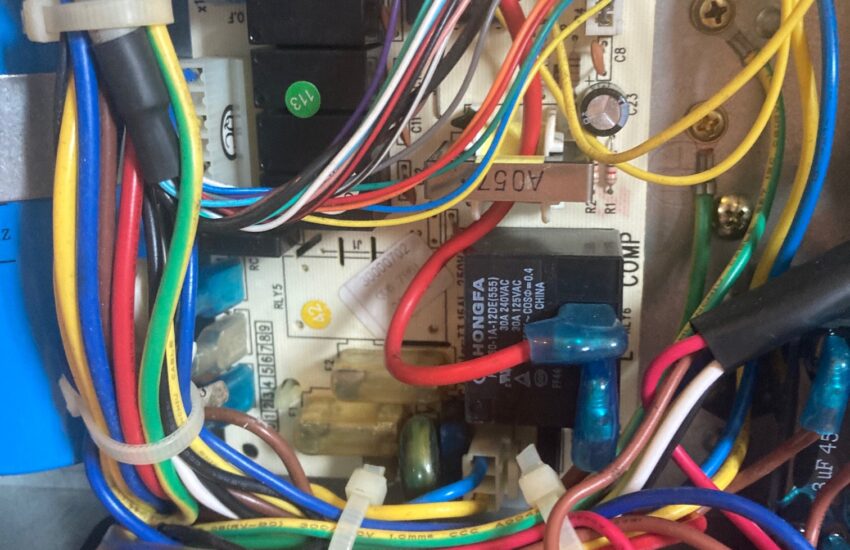
If buttons don’t work, fan speeds won’t change, or the remote is ignored, the control board may be faulty.
Perform a System Reset
Disconnect power completely. Unplug the unit. Wait 5 minutes. Plug it back in and restart. This clears firmware errors that may be disabling fan operation. Many electronic issues resolve with this simple power cycle.
When to Suspect Board Failure
Replace the control board if the display is blank or showing erratic information. Replace it if fan settings don’t save between uses. Replace it if the unit powers on but the fan never activates despite all other checks passing. Board repairs require soldering skills and compatibility checks, making this a job for professionals.
Check Refrigerant and Cooling System Links
While not directly a fan issue, low refrigerant can cause indirect fan shutdowns.
How Cooling Affects Fan Operation
Some units stop the fan if the evaporator coil gets too cold, which creates a risk of icing. The system may also shut down the fan if it detects unsafe pressure levels. These safety protocols are triggered by refrigerant leaks or compressor issues.
Important: Refrigerant handling requires EPA certification. Never attempt to recharge or repair refrigerant lines yourself. This is strictly a professional repair task.
Prevent Future Fan Failures
Prevention beats repair. Follow this maintenance plan to keep your fan running reliably.
Weekly Checks
Before each use, ensure no furniture blocks airflow around the unit. Verify the exhaust hose is straight and properly sealed to the window kit. Check that no debris has accumulated in the intake or exhaust vents.
Biweekly Filter Maintenance
Clean the filter as outlined earlier. This takes just a few minutes but prevents the majority of fan problems.
Monthly Deep Cleaning
Use a soft brush or vacuum with a nozzle attachment to clean the condenser and evaporator coils. Dust buildup on coils reduces efficiency and increases motor strain. Avoid bending the delicate fins on these components.
Annual Professional Service
Schedule a professional tune-up once a year for electrical safety checks, capacitor testing, and deep internal cleaning. This catches potential problems before they cause complete fan failure.
Know When to Replace the Unit
Not all fan failures are repairable. Here’s how to decide whether to repair or replace.
Use Your Warranty for New Units
If your unit is less than one year old and shows signs of motor seizure or capacitor failure, contact the retailer or manufacturer immediately. Provide the model number and serial number from the unit label. Use credit card statements as proof of purchase if you lost the original receipt. Early mechanical failure often indicates a factory defect, and you’re entitled to a replacement.
Compare Repair vs. Replacement Costs
Fan motor replacement typically costs $150 to $250. Capacitor replacement runs $80 to $150, plus labor. A new portable AC costs $200 to $500. In most cases, buying a new unit is cheaper and more reliable than paying for intensive repairs on an older model.
Consider a Window Unit for Hot Climates
Portable ACs struggle when outdoor temperatures hit 100°F. They recirculate hot indoor air to cool themselves, reducing efficiency significantly. An 8,000 BTU window air conditioner vents heat directly outside and cools far more effectively in extreme heat. For regions with brutal summers, this upgrade often makes more sense than repairing a failing portable unit.
Emergency Cooling While You Troubleshoot
If your fan fails during a heatwave, use this immediate relief method while you troubleshoot or wait for repair.
Fan and Mist Technique
Fill a spray bottle with water. Lightly mist your arms, neck, and face. Stand in front of a standard room fan. As water evaporates, it draws heat from your skin, cooling you down quickly. This evaporative cooling trick can prevent heat stress while you diagnose the portable AC issue or wait for professional help.
Key Takeaways for Fixing Your Portable AC Fan
When your portable air conditioner fan not working issue arises, start with the simplest checks first. Verify power is actually reaching the unit. Confirm the mode is set to Cool and the thermostat is below room temperature. Clean the filter and clear all obstructions around the vents. Reset the system with a 5-minute power cycle.
Most issues resolve in under 30 minutes with no tools required. If the fan still won’t run after these basic steps, listen for humming sounds that indicate capacitor problems. Test manual blade spinning to check for motor seizure. Call a professional for electrical component issues or file a warranty claim for units under one year old showing mechanical failure.
For older models with major mechanical faults, consider upgrading to a window air conditioner, especially in regions with extreme summer temperatures. Proper maintenance going forward will keep your next unit running smoothly for years to come.
Frequently Asked Questions About Portable Air Conditioner Fan Not Working
Why does my portable AC fan suddenly stop working?
The most common reasons are clogged air filters, incorrect mode settings, power supply issues, or obstructed vents. Start by cleaning the filter and checking that the unit is set to Cool mode with the thermostat below room temperature.
Can I run my portable AC without the filter?
Never run the unit without a filter. A missing filter allows dust to reach the evaporator coil and motor, causing overheating, icing, and eventual fan failure. Always reinstall a clean, dry filter before operating the unit.
How do I know if the fan motor is seized?
Unplug the unit and try to spin the fan blades by hand. If they don’t spin freely, grind, or stop abruptly, the motor bearings are damaged or the motor is seized. You may also hear a grinding or humming noise when attempting to power the unit on.
Is it worth repairing a portable AC fan?
It depends on the unit’s age and cost. For units under one year old, file a warranty claim for free replacement. For units over three years old with motor or capacitor failure, replacement is usually more cost-effective than repair.
Why does my portable AC work but no fan comes on?
This typically indicates a problem with the control board, capacitor, or fan motor. Check the mode settings first to ensure Cool mode is active and the fan is set to On or High. If settings are correct, the issue likely requires professional diagnosis.
Can a power surge cause fan failure?
Yes. Power surges can damage the control board and fan motor electronics. Using a surge protector with your portable AC prevents these electrical spikes from causing component failure.